blog post
Planning a Serene Pooja Room: Blending Traditional Vastu with Modern Minimalism
In Indian homes, the pooja room is more than a functional space. It is an emotional anchor, a place where mornings begin with gratitude and evenings find calm. As homes evolve and layouts become more compact, the challenge lies in creating a pooja room that respects age-old Vastu principles while aligning with contemporary minimalist design. At Interia, a trusted residential interior designer known for thoughtful and functional spaces, this balance is not just achievable; it is essential.
This guide explores how homeowners can plan a serene pooja room that feels sacred, uncluttered, and timeless, without compromising on tradition or modern aesthetics.
Getting Vastu Right Without the Guilt Trip
It is important to acknowledge that Vastu holds significance for many Indian families. However, the heightened anxiety surrounding the need to achieve perfection in every detail is unwarranted.
Vastu principles make sense when you actually think about them. The northeast gets morning sun, and placing the pooja room there means natural light floods in during prayer time. That's not mystical. It's just smart use of the sun's path. Therefore, it is often recommended by any promising residential interior designer.
The problem starts when families treat Vastu like an exam they might fail. What if the northeast corner is the bathroom? What if the only available space faces south? Real homes have real limitations. Working around them isn't sacrilege. It's practical.
We've seen families stress for months over directional alignment while ignoring basic things like ventilation and lighting. That's backwards. A well-lit, airy pooja space in the "wrong" direction beats a musty, dark one in the "right" spot every single time.
Why Less Actually Works Better Here
Minimalism isn't a trend that the best interior designers in India are trying to compel. It's genuinely better for spiritual spaces.
Think about the pooja rooms you've seen that feel cluttered: photos of every deity imaginable on every single wall. That is not the end - calendars from 2019, half-melted candles, plastic flowers covered in dust, random WhatsApp forwards about Lakshmi pasted on the walls. Does that setup help anyone focus during prayer? Or does it just create visual noise?
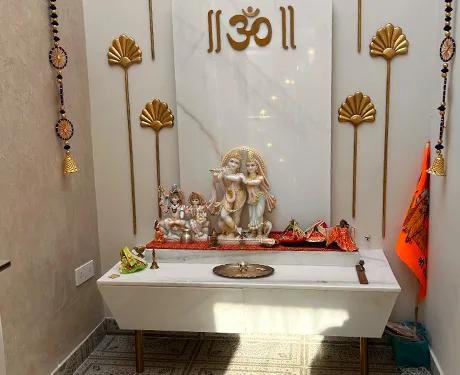
Compare that to a simple marble platform. One or two deities. Fresh flowers when possible. Clean lines. Proper lighting. Which space actually feels sacred?
This is where good residential interior design services earn their keep. They'll push back when families want to cram everything into one corner. Not because they're anti-tradition, but because they've seen what works. Simplicity isn't about doing less. It's about doing what matters.
Making Peace With Small Spaces
Most apartments don't have spare rooms lying around. That's just reality. But you don't need 100 square feet to create a meaningful pooja space.
Wall-mounted units changed the game completely. A properly designed niche with LED backlighting can become a beautiful focal point without eating floor space. Add some storage drawers below for incense and diyas. Done.
Corners work brilliantly too. Especially that awkward northeast corner where furniture never quite fits right anyway. A custom corner unit with a jaali partition creates separation without the need for walls. Glass partitions maintain the open feel while marking the space as distinct.
In some residences, dedicating substantial space may not be possible. However, a thoughtfully designed pooja corner with a well-supported shelf, proper lighting, and intentional placement can suffice. The transformative aspect lies not in size but in the intention behind the design, highlighting the value of specialized residential interior design services in crafting a meaningful and serene space.
Materials That Don't Fight Each Other
Here's where things get interesting. Traditional materials like teak and marble are gorgeous. They're also expensive and high-maintenance. Modern alternatives exist for good reasons.
Engineered wood gives you that warm wood feel without the termite paranoia. It handles humidity better than solid wood, which matters in Indian climates. Pair it with actual brass accents (not brass-painted plastic, please) and you get that traditional-contemporary sweet spot.
For flooring, Kota stone or basic granite does the job perfectly. Both clean easily. Both age well. Both cost less than fancy Italian marble. Save the marble budget for the altar platform, where it really shows.
Lighting deserves a bigger budget than most families give it. Hidden LED strips create ambiance without glare. A small, focused light on the deity prevents that flat, washed-out look. Skip the chandelier. This isn't a wedding hall.
Storage Nobody Sees
Pooja supplies can accumulate quickly, transforming a simple diya and incense into an abundance of items: twelve types of agarbatti, various festival decorations, five unique puja thalis, and an inexplicable peacock feather.
Effective storage solutions are vital for preventing clutter. Drawers beneath storage platforms can house daily essentials, while side cabinets with doors maintain a clean aesthetic. Open shelves require discipline in organization that many find challenging.
Religious texts and prayer books should have their own dedicated space, kept separate from puja supplies. A well-placed shelf that is easily accessible yet distinct from the main altar is essential.
Though the importance of these storage decisions may seem trivial during the design phase, their value becomes clear over time. Years later, a pooja room that remains intentional rather than chaotic showcases the benefits of thoughtful storage.

Colors That Actually Calm People Down
White and cream dominate pooja rooms because they work. They bounce light around. They make small spaces feel bigger. They don't compete with decorative elements.
But all-white can feel sterile. Soft yellows add warmth. Light wood tones bring in that natural element. A broader accent on one wall, maybe a maroon or a muted gold, adds richness without screaming for attention.
Dark colors belong elsewhere. That Instagram-worthy black pooja room looks dramatic in photos. Living with it daily is different. Dark absorbs light. It makes spaces feel closed in. The opposite of what a prayer room should be.
Adding Your Family's Touch
Rules and principles create the framework. But personality makes a space actually yours.
That brass diya handed down from your great-grandmother? Front and center. Your mother's puja thali has been used for forty years? Display it properly. These items carry weight that new purchases from the designer store never will.
Fresh flowers matter more than people think. A single strand of jasmine or a couple of marigolds changes the entire feel. They add life. They add fragrance. They remind you that maintaining the space is an ongoing practice, not a one-time design project.
Festival decorations can rotate seasonally. Different drapes for different occasions. Special arrangements for Diwali or Navaratri. This keeps the space from feeling frozen in time.
When Professional Help Actually Helps
Balancing Vastu, space constraints, aesthetics, storage, and budget simultaneously is tricky. Most people can visualize what they want. Executing it properly is where things go wrong.
The best interior designers in India have solved these exact problems dozens of times. They know which contractors actually deliver on time. They know which materials hold up and which ones look good in the showroom but fail in six months. They know how to have the difficult conversation about budgets without making you feel cheap.
More importantly, they prevent expensive mistakes. That beautiful Italian marble that stains with the first drop of kumkum water? A designer with experience would have warned you. That lighting setup that looks perfect but creates weird shadows during evening prayers? Someone with expertise catches that in the planning stage.
Professional services cost money upfront. They save money long-term by getting things right the first time.
Getting Started On Yours
Measure your space honestly. Note the direction. Think about how your family actually uses the area for prayers. Do you sit? Stand? Need room for multiple people during festivals? These practical questions matter more than design magazine aesthetics.
Collect photos of pooja rooms you like. But pay attention to why you like them. Is it the lighting? The material? The overall vibe? The specific deity setup? Clarity on what appeals to you makes conversations with designers infinitely easier.
Set a budget that includes a 15-20% buffer. Quality execution costs more than basic work, but it also lasts longer. Think five-year timeline, not five months.
Let's Build Your Sacred Space
Pooja rooms deserve the same design attention as living rooms or kitchens. More, actually, since they serve your family's spiritual needs daily for years.
At Interia, we've designed prayer spaces for everyone from joint families in traditional homes to young couples in studio apartments. We get that Vastu matters. We also get that real homes have real constraints. Our job is to find solutions that respect both.
Whether you have a full room to work with or just a corner, our team can help design a pooja space that feels yours. Traditional where it counts. Contemporary, where it helps. Functional always.
Ready to start? Talk to Interia's design team. Let's create a prayer room where peace comes naturally, and design supports devotion instead of distracting from it.
Common Questions About Pooja Room Design
Can the pooja space go in a bedroom?
It can if no other options exist. Use a partition or cabinet to create a clear separation between the sleeping area and the prayer space. Many families do this successfully in apartments.
What's the smallest functional size?
A 2x2 feet wall unit works fine. You don't need a vast space. You need a thoughtful design that makes the area feel purposeful.
Do all Vastu rules need to be followed strictly?
Vastu offers guidelines, not commandments. Work within your home's reality. A well-designed, well-lit space beats perfect directional alignment in a dark corner.
How do you keep it from getting cluttered?
Weekly cleaning. Remove dying flowers immediately. Put puja items back in storage right after use. Resist the urge to add decorative items constantly. Discipline maintains minimalism.